How to Become an OnlyFans Creator in 2026: The Honest Beginner's Playbook
A practical, step-by-step guide to starting as an OnlyFans creator in 2026 — setup, pricing, content strategy, marketing, safety, and how to scale past the beginner plateau.
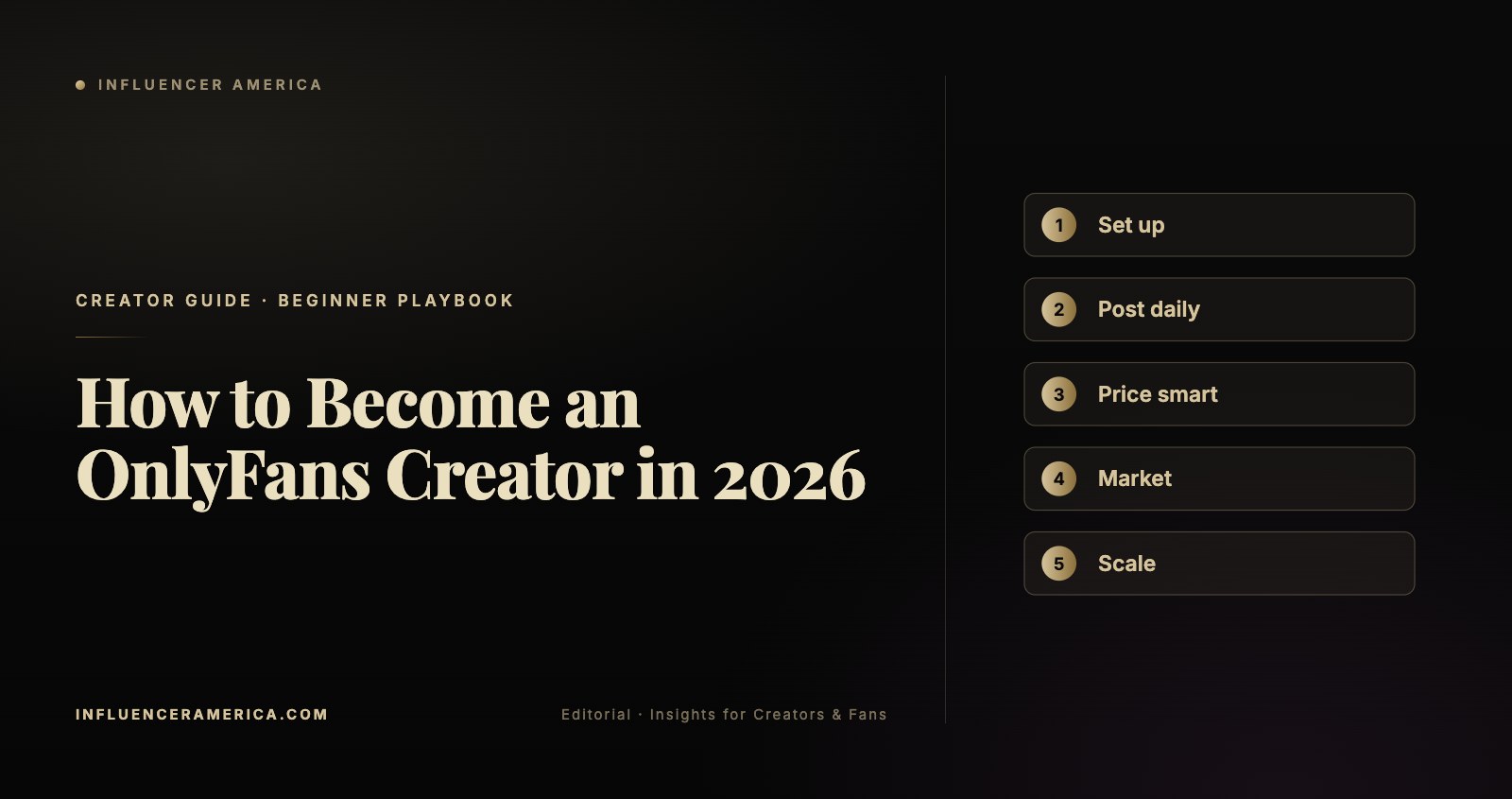
Becoming an OnlyFans creator in 2026 is, mechanically, one of the easiest business startups on the planet. The platform handles payments, age verification, hosting, and distribution. What's hard isn't the setup — it's everything that comes after. This is the playbook we wish every creator had before they started.
Whether you're thinking about full-time creation or a serious side business, this guide walks through the entire beginner arc: setup, first-month systems, pricing, content, marketing, safety, and when (and how) to bring in professional help. If at any point you want a real conversation about whether it's right for you, you can apply to work with us — we talk every month with dozens of creators considering this path, and we're happy to share honest advice whether you end up partnering with an agency or not.
Before diving in, two pieces of honest context we strongly recommend skimming first: our breakdown of what OnlyFans creators actually earn in 2026 (so your expectations are realistic), and our OnlyFans vs. Fansly vs. Passes vs. Fanvue comparison (so you pick the right primary platform for your niche).
Step 1: Decide what kind of creator you're going to be
Before you set up an account, get clear on three decisions. These three choices will shape every other decision you make for the next two years.
Your niche. "I'll post sexy content" is not a niche. "Curvy girl-next-door, gym-heavy content, Southern accent in voice notes" is a niche. "Fit goth couple, alt aesthetic, gaming crossover" is a niche. Niches win because a small number of fans feel like the content was made specifically for them. Generic accounts compete with hundreds of thousands of other generic accounts.
Your aesthetic. How things look matters more than new creators think. Lighting, color palette, wardrobe, how your grid reads at a glance. Pick a few reference creators (from outside your niche ideally) whose visual language you like and define your own.
Your boundaries. Write them down. What you will and won't show. What kinds of DMs get ignored. Whether you'll ever do custom videos; whether you'll ever show your face; whether you'll ever collab; whether you'll ever meet fans in person. The only ethical way to build a sustainable creator career is to set boundaries before you need them — not after a fan is already asking.
Step 2: The setup
Once you've made those decisions, the actual account setup is straightforward. Plan on a few hours for the whole thing.
Create a dedicated email address just for your creator business. Not your personal email. Not your work email. A fresh one.
Sign up at OnlyFans. You'll need a valid government-issued ID for verification. This is legally required and a good thing — it's one of the reasons the platform has the trust it does.
Set up banking. You can use your personal bank account to start, but most serious creators eventually move to an LLC or similar business structure with its own account. Talk to an accountant before you hit your first few thousand dollars in revenue. Our plain-English tax guide for creators covers the fundamentals — self-employment tax, quarterly payments, deductions, LLC vs S-Corp — that you should understand before your first big payout.
Fill out your profile. Username (pick something you can live with long-term), bio, cover image, subscription price, and welcome message. Your bio should communicate your niche and personality in under 100 words. Your cover image should signal the aesthetic immediately.
Price smartly for launch. Most new creators price between $3.99 and $9.99 to lower the barrier to the first subscription. You can always increase price later. Running a few weeks of free-trial promotions is normal. Avoid pricing so low that you attract fans who won't spend, or so high that nobody takes a chance on an unknown creator.
Schedule your first 30 days of content before you launch. Do not go live with one photo and a hope. Have at least 20–30 pieces of content (feed posts, stories, a few longer videos) ready to post before you open the account to fans.
Set up two-factor authentication immediately. Then again. And save the backup codes somewhere safe.
Step 3: The first 30 days
The first month is about installing habits, not chasing revenue. Here's the system that works:
Post daily. Feed posts, stories, or PPV messages — something every day, without exception, for the first 30 days. Consistency is how the algorithm, your fans, and your own discipline all learn that you're serious.
Respond to every DM within 24 hours. Fast replies convert subscribers into spenders at a rate that's hard to overstate. You can automate the very first "Hey, thanks for subscribing!" message but everything after should be real, on-brand, and prompt.
Run one PPV campaign per week. A themed photo set or a longer video at an unlock price somewhere between 2x and 5x your subscription rate. PPV is where most of your revenue will come from. Learn it early — and as your list grows, our chat management strategy guide walks through the welcome flow, fan segmentation, and pricing ladder that turn a decent PPV into a consistent one.
Track everything. Subscribers, churn, top spenders, best-performing posts. You can't optimize what you don't measure.
Reinvest any revenue into content quality. Better lighting, a tripod, a proper microphone, maybe a one-hour shoot with a photographer. Not a new car.
Illustrative mix based on industry reporting; exact splits vary by niche, subscriber count, and platform.
Step 4: Marketing — the thing nobody wants to do
Here's the most underappreciated truth in creator advice: subscribers don't appear. OnlyFans' own internal discovery helps, but the creators who grow fastest are the ones who drive external traffic. Plan on spending half your working hours on marketing for the first year at least.
The best channels for creator traffic in 2026:
Twitter/X. Still the single best platform for driving subscription creator traffic. Post teasers, engage with your niche community, run paid shoutouts from larger accounts.
Reddit. Specific subreddits allow creator self-promotion. Read the rules of each one carefully — Reddit bans creators who spam. Done well, Reddit posts can produce free subscribers for weeks.
TikTok and Instagram. Neither platform allows direct promotion of adult OnlyFans accounts, but both are valuable for building a "SFW" (safe-for-work) version of your brand that funnels people to a link-in-bio that eventually leads to your paid account. This is slower but compounds.
Paid promotions and shoutouts. Paying larger creators (or industry promotion accounts) to shout you out is the fastest way to grow, if you pick the right accounts. Expect to lose money on your first few campaigns while you learn what works. Treat it like paid advertising — track ROI.
Collaborations. Cross-promoting with creators of similar size in adjacent niches is almost always a net win for both parties.
Step 5: Pricing strategy that actually works
New creators obsess over subscription price. Experienced creators obsess over the full pricing stack. Subscription is just the front door; the real revenue lives behind it.
Subscription price: Start at $4.99–$9.99 for launch to reduce friction. Raise over time as you build a track record.
Monthly promotional discounts: Running 30%-off and 50%-off trials regularly is normal and often works. A fan who takes a discount and then stays is worth more than a fan who never tried.
Bundles: 3-month and 6-month bundles at a discount are a great way to lock in revenue from fans who are already engaged.
PPV pricing: The most common beginner mistake is pricing PPV too low. A 30-minute video at $9.99 undersells both you and the content. Start PPV in the $14.99–$29.99 range; watch what works; adjust from there.
Tip prompts: A specific "tip to see the full photo" or "tip to send you a longer version" prompt at the end of a post converts much better than a passive "tips welcome" message.
Custom content rates: If you offer custom videos, set a minimum and stick to it. Going below $100 for a 2-minute personalized video is almost always a mistake.
Step 6: Safety and operational hygiene
Most creators who end up with really bad experiences in this industry share a few common patterns: they didn't separate their creator identity from their personal life, they reused passwords, they revealed their location in content, or they handed login credentials to a partner without security discipline. Do not be that creator.
Use a dedicated email for everything creator-related.
Use a password manager and enable two-factor authentication on every related account (email, OnlyFans, socials, banking).
Watch for location leaks — mirrors with street signs visible, geotagged photos, visible receipts, distinctive furniture that appears in personal photos on other platforms.
Watermark your content. Most OnlyFans content ends up re-hosted somewhere eventually; watermarks make it traceable and give you basis for takedown requests.
Keep personal and professional identities separate. Different usernames, different email, ideally a different phone number (Google Voice works, dedicated eSIM is better).
Know what to do when content leaks. OnlyFans has built-in DMCA tools, but also keep a list of the fastest-responding third-party takedown services. A single leak is not the end of the world; handled quickly, it's a minor annoyance.
Don't meet fans in person. Full stop. There are narrow, carefully-managed exceptions that top-tier professionals sometimes participate in (events, conventions), but those are not what's being described when a random subscriber offers to "meet up."
Step 7: What to do when you plateau
Most creators hit a plateau somewhere between month three and month six. Subscriber growth slows. Revenue flattens. Before you conclude the platform doesn't work for you, run through this diagnostic:
Is your content consistent and well-produced? Six months of daily content is the honest floor for most creators to have enough material to judge what's working.
Is your niche clear and differentiated? If your grid looks like every other creator's, that's a positioning problem, not an audience problem.
Is your marketing actually happening? Most plateaus are marketing plateaus. Creators stop promoting, either because they're tired or because they convinced themselves the platform should do the work. The platform does not.
Is your chat fast, warm, and on-brand? Slow or cold chat is a stealth killer. Read your last 20 DMs — do they sound like you? Are you replying within an hour during your working hours?
Is your pricing stack right? Is PPV producing at least 30–40% of revenue? Are your tip prompts explicit? Is your custom rate high enough to be worth your time?
Are you reinvesting? Revenue that plateaus often reflects a content-quality plateau. Better photography, better video, a collaboration or two, a small paid promo campaign can often unlock the next level.
And if all of those are dialed in and you're still stuck — that's when an agency starts to make real sense.
Step 8: When to bring in professional help
The pattern we see, again and again: a creator grows solo to somewhere in the $3,000–$10,000 per month range, then stalls. Not because they're not good at this — they're clearly good at this — but because they've run out of hours. DMs are eating their evenings. Marketing is half-done. Content production is rushed. Pricing and PPV strategy hasn't evolved in months.
That is exactly when a reputable OnlyFans management agency starts to pay for itself. Not as a magic wand — but as a team that takes over the operational work so the creator's hours can move to content and direct fan engagement. For most creators in that stalled-but-serious band, a good agency will grow revenue faster than the commission costs, and the creator will take home more with less work. We've written a detailed breakdown of what an OnlyFans management agency actually does — read it before signing anything.
The key word is reputable. The wrong agency will hurt you. The right one is transparent about fees, references its existing creators, has a fair contract with exit terms, and treats platform compliance seriously. If you'd like to see what that looks like in practice, apply to work with Influencer America and we'll have an honest conversation about where you are and whether partnering makes sense at this stage.
Step 9: The long game
The creators who are still doing this profitably in five years almost always share a few traits:
- They treat it like a real business. Tax structure, accounting, business insurance, formal contracts with collaborators.
- They diversify their content catalog across platforms without burning the primary one out.
- They protect their mental health. Burnout is the most common reason creators quit — not earnings, not the platform.
- They reinvest. Better production, better team, better marketing.
- They build direct relationships with their fans. The creator whose fans will follow them to any platform has a moat that's very hard to erode.
The shorter, less glamorous version: the creators who stay at the top do the unglamorous work every day for years. The platform rewards consistency more than anything else.
The short version
Becoming an OnlyFans creator in 2026 is fast to start and hard to scale. The first 30 days are about installing habits: daily posting, fast DM responses, weekly PPV campaigns, and serious marketing. The next 90 days are about learning what your audience wants and pricing accordingly. Past $3,000–$5,000 a month, the solo ceiling starts to bite, and partnering with a reputable management agency often becomes the fastest way to grow. Do the work, protect yourself operationally, pick your partners carefully, and treat it like a real business — because that's what it is.
Frequently Asked Questions
Related Reading
How Much Do OnlyFans Creators Really Make? An Honest 2026 Income Breakdown
A data-backed look at what OnlyFans creators actually earn in 2026 — averages, medians, top-tier income, what drives the difference, and how professional management changes the math.
OnlyFans vs. Fansly vs. Passes vs. Fanvue: Which Subscription Platform Is Right for You in 2026?
An honest 2026 comparison of the major subscription content platforms — fees, payouts, discovery, content rules, and which platform fits which type of creator (and which fan experience).
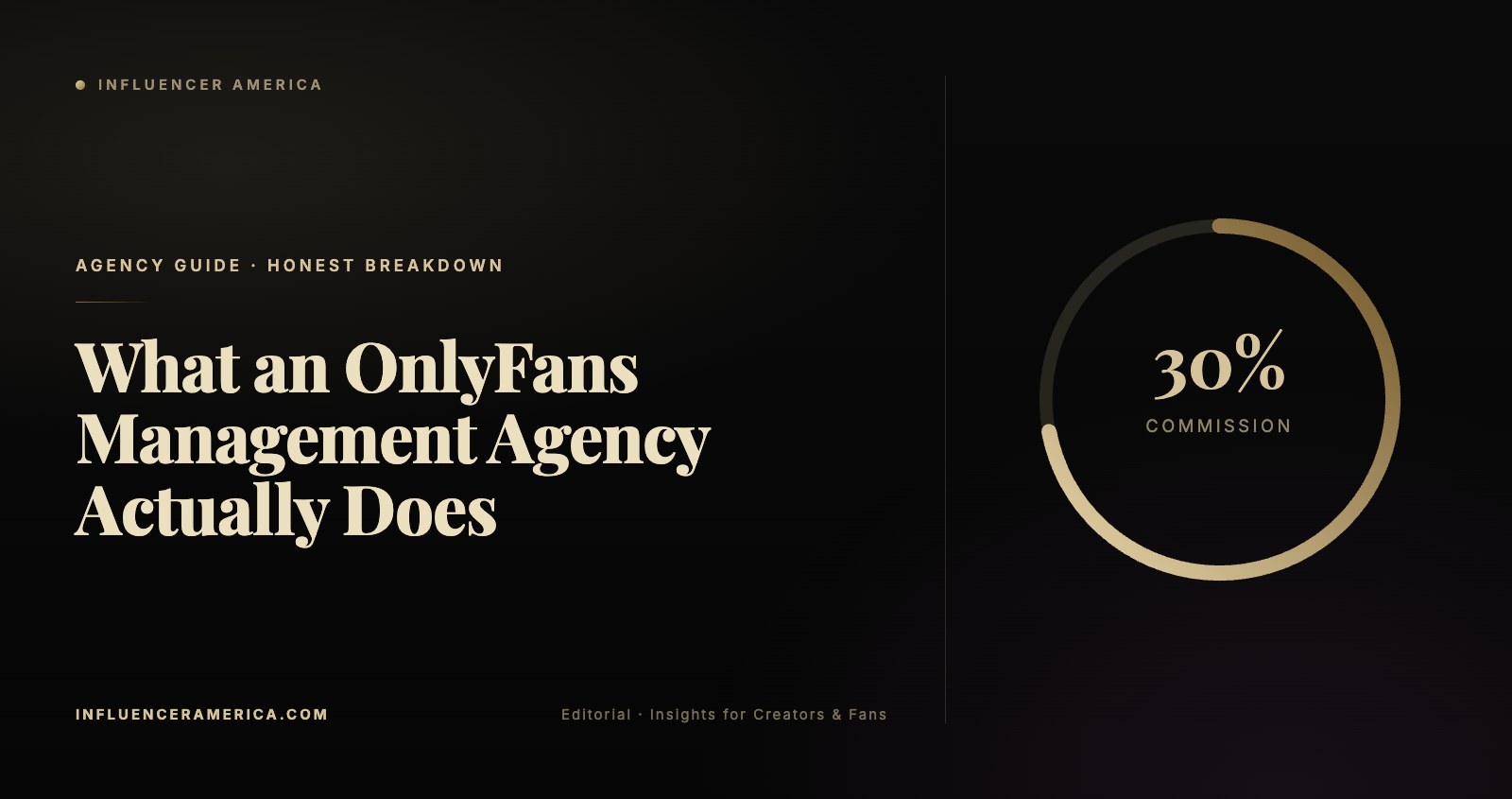
What an OnlyFans Management Agency Actually Does — And How to Pick One That Won't Burn You
An unvarnished look at what OnlyFans management agencies really do, what they charge, which services matter most, and the red flags to watch for before signing any contract.